
Editorial: twentieth issue of Latam Plagas
We reach our twentieth issue upholding the same conviction: knowledge transforms our profession.
 Guillermo J. Tarelli · Issue 20


Listen to this article with your device’s voice.
We reach our twentieth issue upholding the same conviction: knowledge transforms our profession. Reaching issue number 20 of LATAMPLAGAS represents much more than achieving a milestone figure. It is an opportunity to look back at the path we have traveled and, fundamentally, ask ourselves where our activity is evolving.
For many years, speaking of pest management was associated almost exclusively with controlling organisms considered harmful and using products designed to eliminate them. That perspective has changed decisively. Today we understand that our work begins long before an application and that the best results come from preventive processes planned and implemented on time.
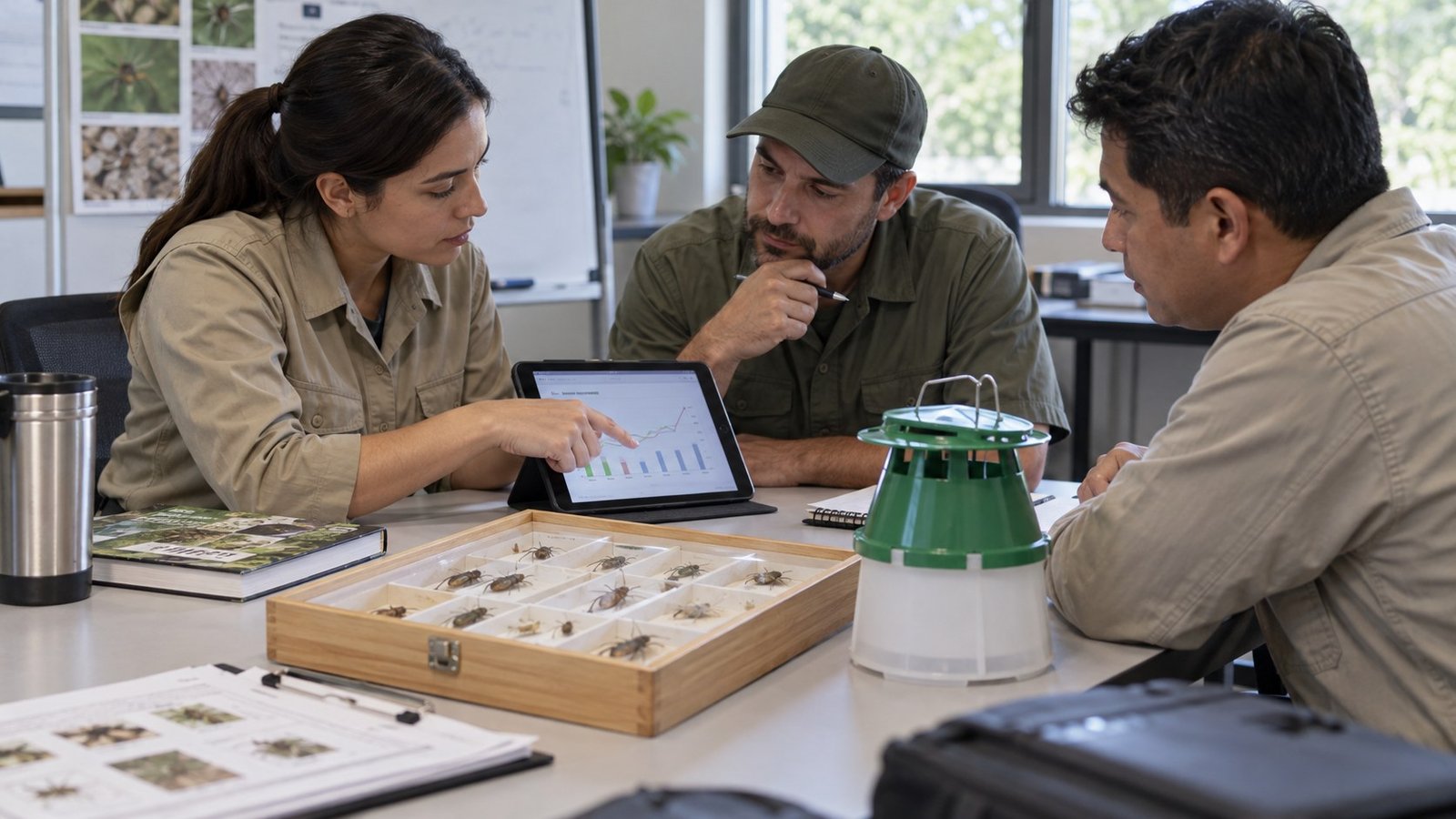
Understanding the biology and behavior of species, interpreting the environment, identifying the factors that favor their presence, monitoring, analyzing information, and establishing preventive measures are essential components of an activity that is becoming increasingly technical and specialized. The real challenge no longer consists solely in controlling a pest, but in properly managing the risk it represents.
This paradigm shift also modifies the role of those of us who work in the sector. We need professionals capable of observing, interpreting, and making decisions. People who understand that behind the presence of an insect, a rodent, or any other organism lies a set of environmental conditions that we must recognize and modify whenever possible. Ultimately, WITHOUT A FAVORABLE ENVIRONMENT THERE WILL BE NO PESTS. It means understanding the pest as a consequence or outcome.
At the same time, new tools are expanding our possibilities. Digital monitoring systems, sensors, increasingly specific capture devices, data processing, automation, and artificial intelligence are beginning to integrate with physical, biological, and chemical methods. Technological innovation offers enormous opportunities, yet no technology replaces the knowledge required to decide what to do, when to do it, and why.
In this scenario, continuous training ceases to be an option and becomes a necessity. Our profession requires updating, sharing experiences, and accessing reliable technical information. And that is where LATAMPLAGAS once again finds its purpose. Throughout these twenty issues we have sought to build a space where scientists, technicians, companies, universities, and professionals from different countries can meet. Because an industry grows when knowledge exists, but truly evolves when that knowledge circulates and is shared.
We reach issue 20 with special gratitude to everyone who made this journey possible: the authors, interviewees, contributors, advertisers, and, above all, our readers. Each issue is the result of a community that continues to grow and shares the determination to professionalize our activity.
The challenge ahead of us is immense and exciting. New pests, new technologies, and new demands will certainly emerge. Tools that we cannot yet imagine today will also appear. Yet one thing will hardly change: the best decisions will continue to be born from knowledge. At LATAMPLAGAS we renew our commitment to helping build it, share it, and turn it into better practices. Twenty issues later, we are still learning, and we still have much to discover.