
Use of synergized insecticides in fly control
We all already know flies and learned to recognize them with the naked eye by their size, shape, color, etc. Among the most common, the following stand out: domestic, vinegar, humidity, meat, among others.
Technical summary
- Focus
- We all already know flies and learned to recognize them with the naked eye by their size, shape, color, etc. Among the most common, the following stand out: domestic, vinegar, humidity, meat, among others.
- Approach
- It brings together technical criteria linked to Edición 10, insecticidas and latam plagas.
- Use
- Useful for professionals who need context, diagnosis and operational decisions in products and technologies.
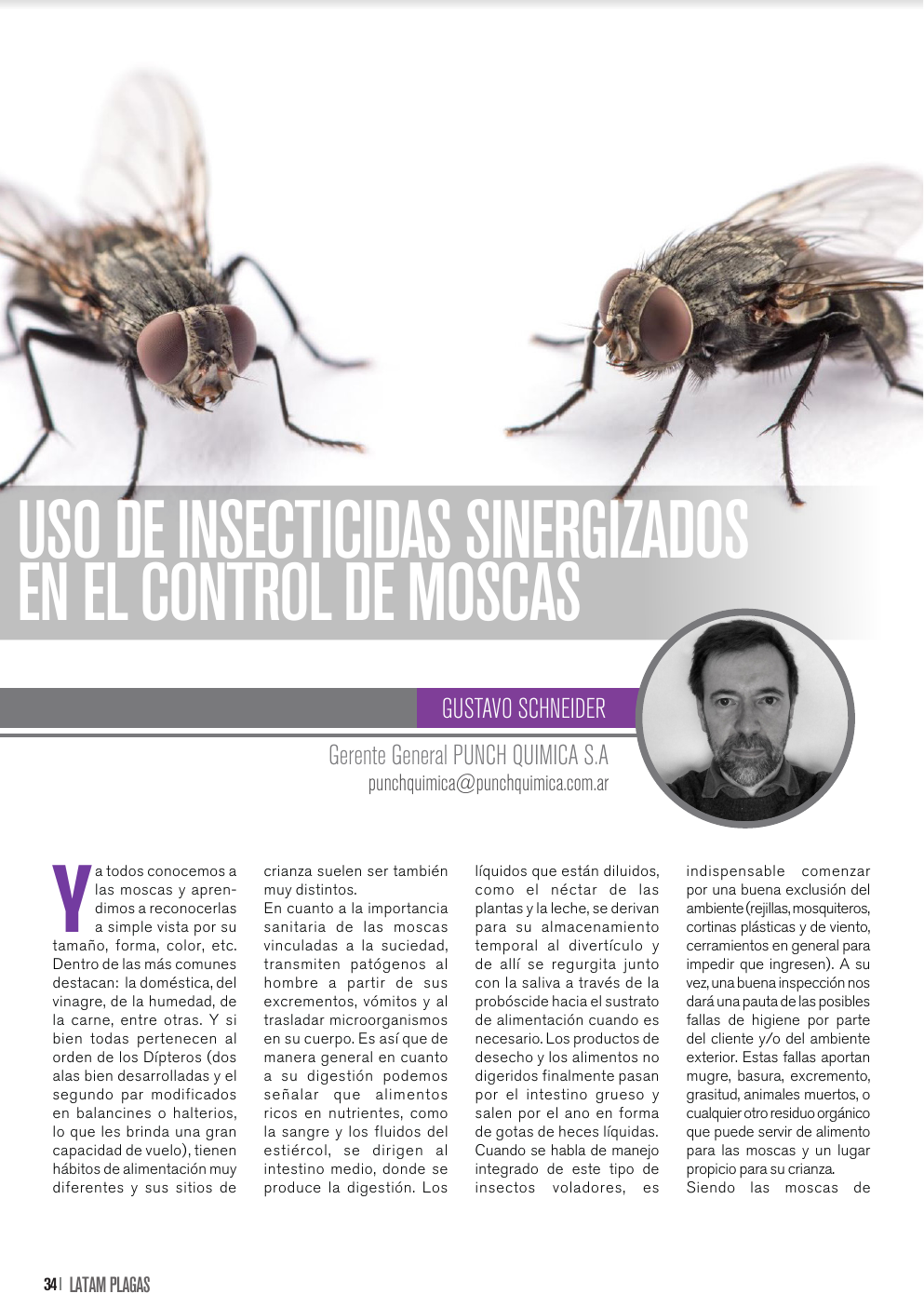
We all already know flies and learned to recognize them with the naked eye by their size, shape, color, etc. Among the most common, the following stand out: domestic, vinegar, humidity, meat, among others. And although they all belong to the order of Diptera (two well-developed wings and the second pair modified into rockers or halteres, which gives them great flight capacity), they have very different feeding habits and their breeding sites.
upbringing are also usually very different. Regarding the health importance of flies linked to dirt, they transmit pathogens to humans from their excrement, vomit and by transferring microorganisms in their body. Thus, in general terms regarding its digestion, we can point out that foods rich in nutrients, such as blood and fluids from manure, are directed to the middle intestine, where digestion occurs. The
Liquids that are dilute, such as plant nectar and milk, are diverted for temporary storage to the diverticulum and from there are regurgitated along with saliva through the proboscis to the feeding substrate when necessary. Waste products and undigested food eventually pass through the large intestine and out through the anus as droplets of liquid stool. When talking about integrated management of this type of flying insects, it is
It is essential to start with good exclusion from the environment (grids, mosquito nets, plastic and wind curtains, enclosures in general to prevent entry). In turn, a good inspection will give us an idea of possible hygiene failures on the part of the client and/or the outside environment. These failures provide dirt, garbage, excrement, grease, dead animals, or any other organic waste that can serve as food for flies and a suitable place for them to breed. Being the flies
complete metamorphosis, they go through the stages of egg – larva – pupa – adult. The eggs are deposited on organic waste and from where the larvae emerge and feed on it. It is there where the highest percentage of individuals of the total population is found, that is, the immature stages. If we manage to eliminate these breeding sources, we will be reducing fly infestation to a greater extent and preventing its spread. That is why when we talk about chemical treatment, we should never neglect breeding sites considering that they are often impossible to eliminate. An ideal treatment is to spray these sites with the adulticidal insecticide, and an IGR (growth regulator). In this way we will be attacking all stages of the pest with a single application. It is essential to consider that there are many populations of flies resistant to various modes of action of insecticides, this caused by the selection of resistant individuals in a population based on insecticidal pressure. In that context the
The use of synergized insecticides is essential, to the extent that their lethal effect is enhanced, even serving in populations resistant to conventional insecticides. Several studies have demonstrated the ability of the synergist piperonyl butoxide to be
very effective against insects resistant to conventional pyrethroids, when resistance is conferred by multi-function oxidase enzymes. That is the case of Glacoxan Delta T formulated from deltamethrin together with tetramethrin as a knockdown and
a synergist, piperonyl butoxide, a mixture that makes this product an excellent control tool in high infestations, especially when seeking immediate removal of adult flies. In terms of behavior, its activities include flight, feeding, resting, mating and oviposition. They generally leave the feeding site when they are full and rest in the surrounding environment while digestion proceeds. They usually do it on warm surfaces and sheltered from the wind. Thus, once these surfaces have been identified, spraying them with Glacoxan Delta T will leave the deltamethrin residual for several days and will eliminate the insects that settle on them.