How much of a head start did we give it? The German cockroach and the clock we do not control
Mariano Paggi analyzes how the biology of Blattella germanica turns delay into a risk factor and requires a program built on diagnosis, prevention, and monitoring.
 Mariano Paggi · Issue 20


Listen to this article with your device’s voice.
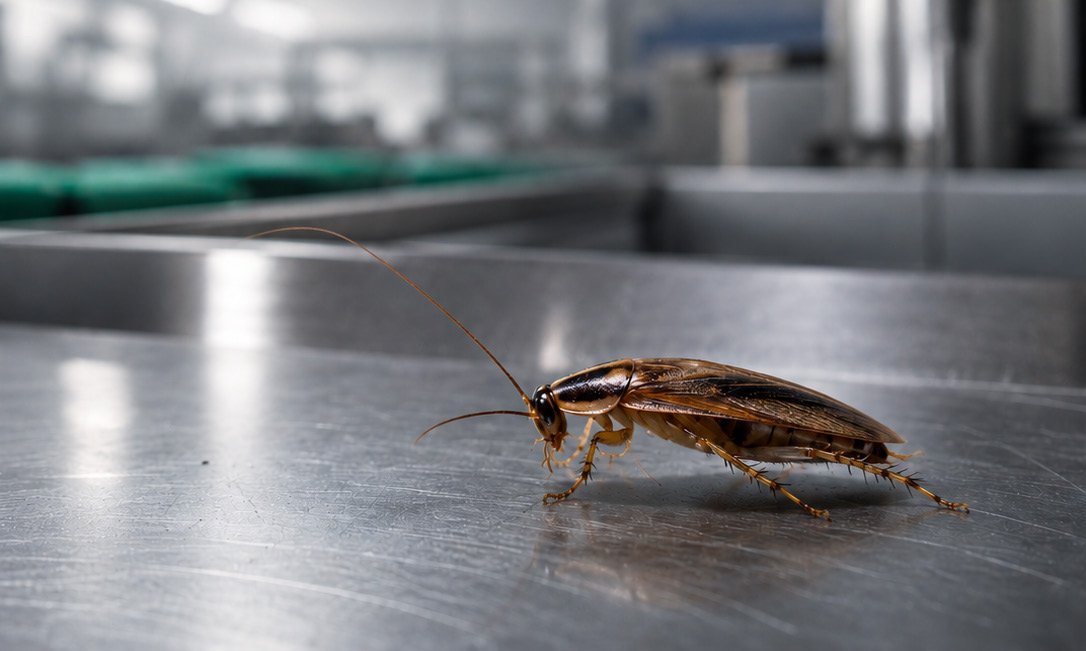
Allow me to begin with an uncomfortable question: when was the first time a German cockroach was detected in your facility, and how much time elapsed between that finding and a professional diagnosis, corrective actions, and treatments? The answer—measured in days, weeks, or, less infrequently than one would like to admit, months—often explains on its own the distance separating a contained episode from an established infestation.
To structure what follows, I want to make one thing clear beforehand, because it is an absolute truth that cannot be ignored: in controlling Blattella germanica, biology rules, and it rules alone. Logistical, financial, managerial, or production-schedule constraints are real and entirely legitimate, yet they belong to the human realm; the cockroach population does not pause, negotiate, or grant extensions because a plant has not yet found the right moment, budget, or management decision to act. While people deliberate, the species keeps executing its sole program with a punctuality that does not depend on our schedule—and it does so, as we will see, at a speed that turns delay, rather than the insect itself, into the true risk factor.
Biotic potential, or why time is on its side
Biotic potential is, in a single sentence, the maximum rate at which a species would multiply if nothing held it back. The concept is neither improvised nor recent: entomologist Royal N. Chapman formalized it in 1928 to name a population’s intrinsic capacity to grow under ideal conditions—a force that is never fully expressed in nature because it always collides with what Chapman himself called “environmental resistance”: the sum of factors—food, water, space, harborage, predators, climate—that curb that expansion. The actual size of any population in an environment, which may well be your food processing plant, can therefore be understood as the equilibrium resulting from how strongly biology pushes toward its central objective (offspring) versus how strongly the environment limits that pressure. Please keep that balance in mind, because the entire integrated management approach we will discuss later rests upon it.
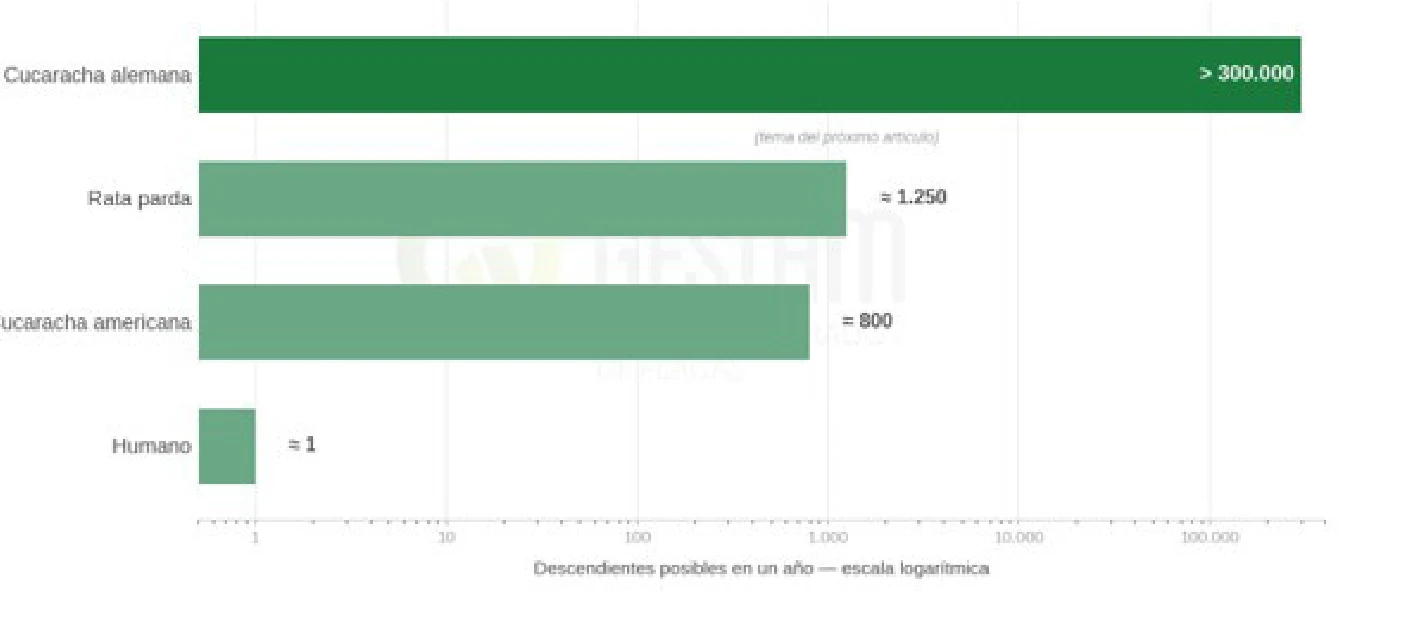
Now then, not all species push with the same force. Nature broadly distinguishes between organisms whose populations are characterized by reproductive strategies aimed at producing few offspring and caring for them over years—an elephant, a whale, or humans themselves (K-strategists), which rarely exceed one offspring per birth and per year—and organisms that bet on quantity, early maturity, and rapid mass reproduction (r-strategists). The German cockroach belongs unequivocally to the second group, and within it holds a privileged place: it is the domestic cockroach with the highest known reproductive potential. Whereas other insects lay a handful of isolated or clustered eggs, engage in cannibalism, have low viability rates, or mature slowly or in seasonal cycles, each German cockroach female produces between four and eight oothecae (egg capsules) over her lifetime, with roughly thirty to forty eggs each—amounting to on the order of two hundred to two hundred fifty offspring per female. Moreover, she does so while carrying the capsule attached to her abdomen, protecting her progeny even from insecticides (remember that most insecticides approved for the food industry cannot penetrate the outer layer of the ootheca) until just hours before hatching. Scaled to the population level, when conditions are favorable, ONE single female and her offspring can generate around TEN THOUSAND INDIVIDUALS over a single lifecycle; let me highlight one figure: theoretical estimates under ideal conditions easily exceed three hundred thousand in one year. These numbers are not meant to cause alarm, but to gauge the magnitude of what is actually being negotiated when someone decides to “wait until Monday, or until the scheduled shutdown,” when a single insect in a finished product can inflict enormous damage on a brand.
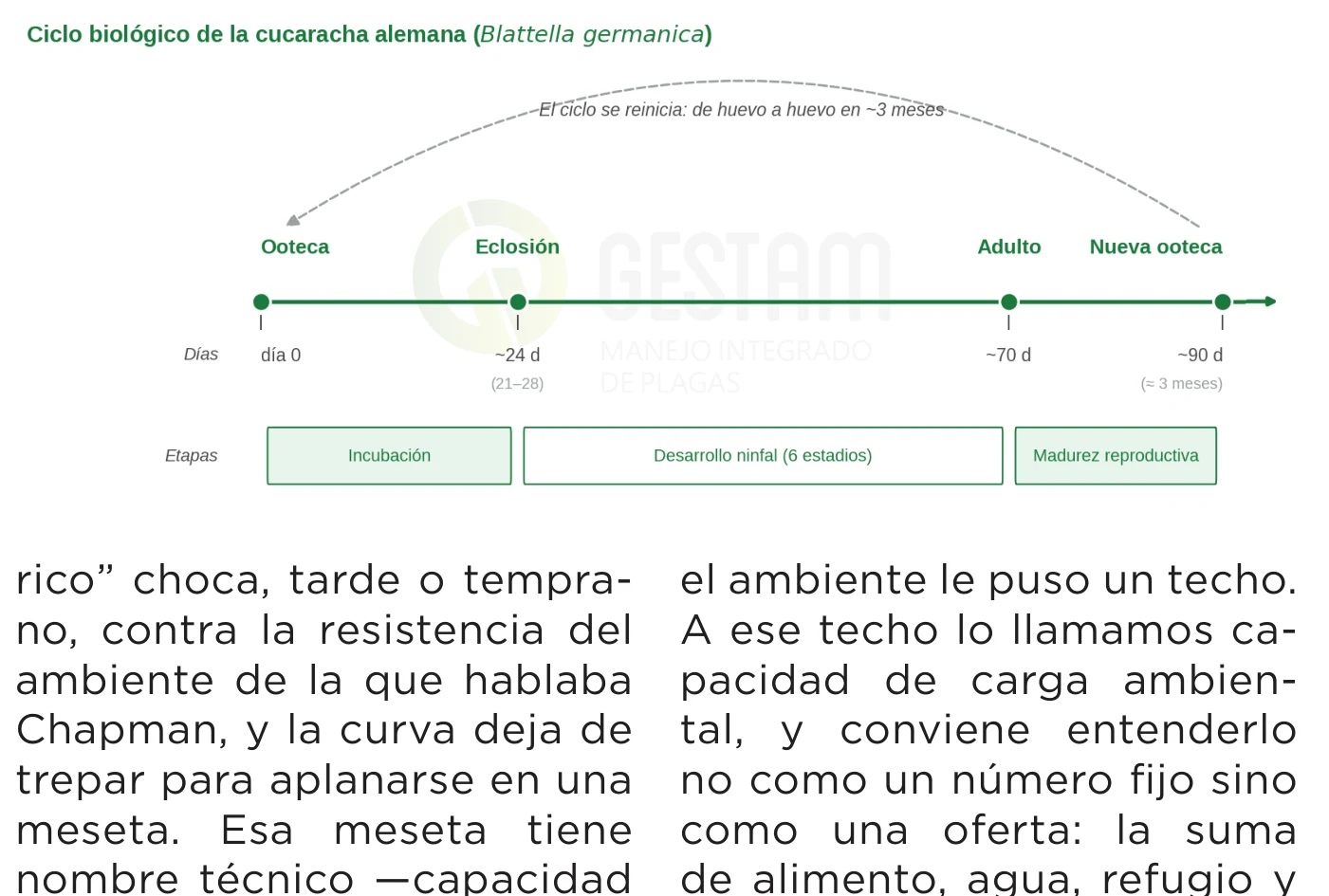
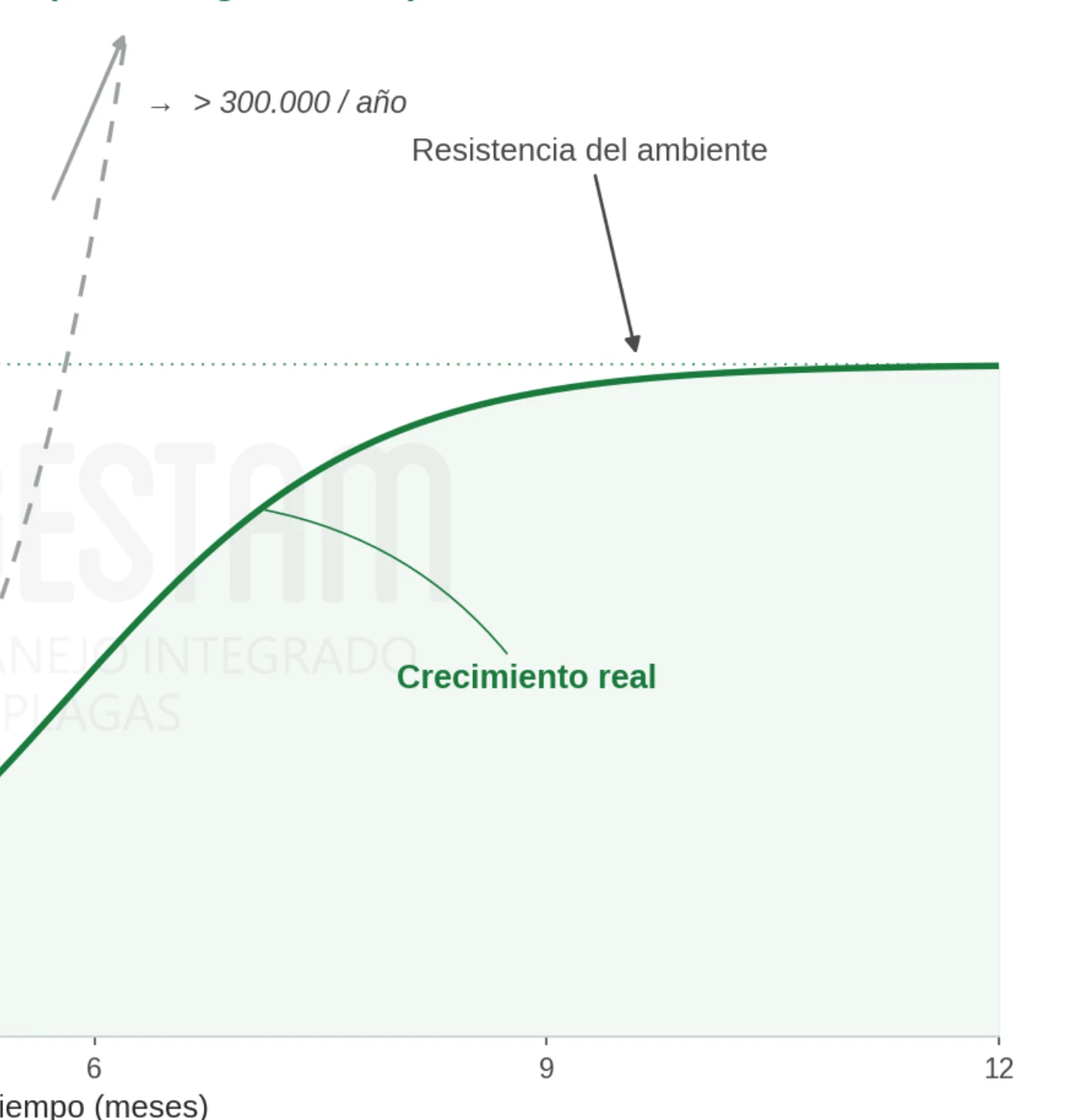
Let us bring that abstraction down to a plant floor scenario: suppose that today, hidden inside a pallet, within the corrugated cardboard of a box, or inside incoming raw materials, an ootheca enters the facility. If it finds what the species requires—warm temperatures on the order of twenty-five to thirty degrees Celsius, sufficient moisture, or a site where infestations have occurred before, carrying the chemical cue of feces from other individuals that impregnate the substrate and signal that the harborage is safe and habitable—the nymphs will hatch within three to four weeks and gather, as soon as their cuticle hardens, into cohorts of around thirty siblings. Under those optimal conditions, they will reach adulthood and reproductive maturity in roughly six to eight weeks, by which time the new females will already be forming their own oothecae: the complete cycle, from egg to egg, closes in about three months, with the decisive particularity that generations do not follow one another in neat succession but overlap, so multiple broods coexist and reproduce simultaneously within the same harborage. Let us do the math, even roughly: if thirty females emerge from that single ootheca and each repeats the process, the second generation is no longer counted in tens but in hundreds, the third in thousands, and so on; three or four turns of this clock—which in a single year under ideal conditions can reach six—are enough to go from an isolated finding to a structural infestation, especially if the harborage they find is inaccessible, which unfortunately for everyone is usually the case. If plotted on a graph, that curve would not rise gradually: it would climb explosively, almost vertically, because that is precisely how exponential growth behaves when nothing limits it. And here arises the question I want to address in the remainder of this article: why, then, does no plant that fails to perform proper IPM end up literally buried under cockroaches? Because sooner or later that “theoretical” growth hits the environmental resistance Chapman described, and the curve stops climbing and flattens into a plateau. That plateau has a technical name—environmental carrying capacity—and far from being an academic technicality, it is precisely the terrain where integrated pest management can and must intervene.
Managing environmental carrying capacity: true pest control from the root
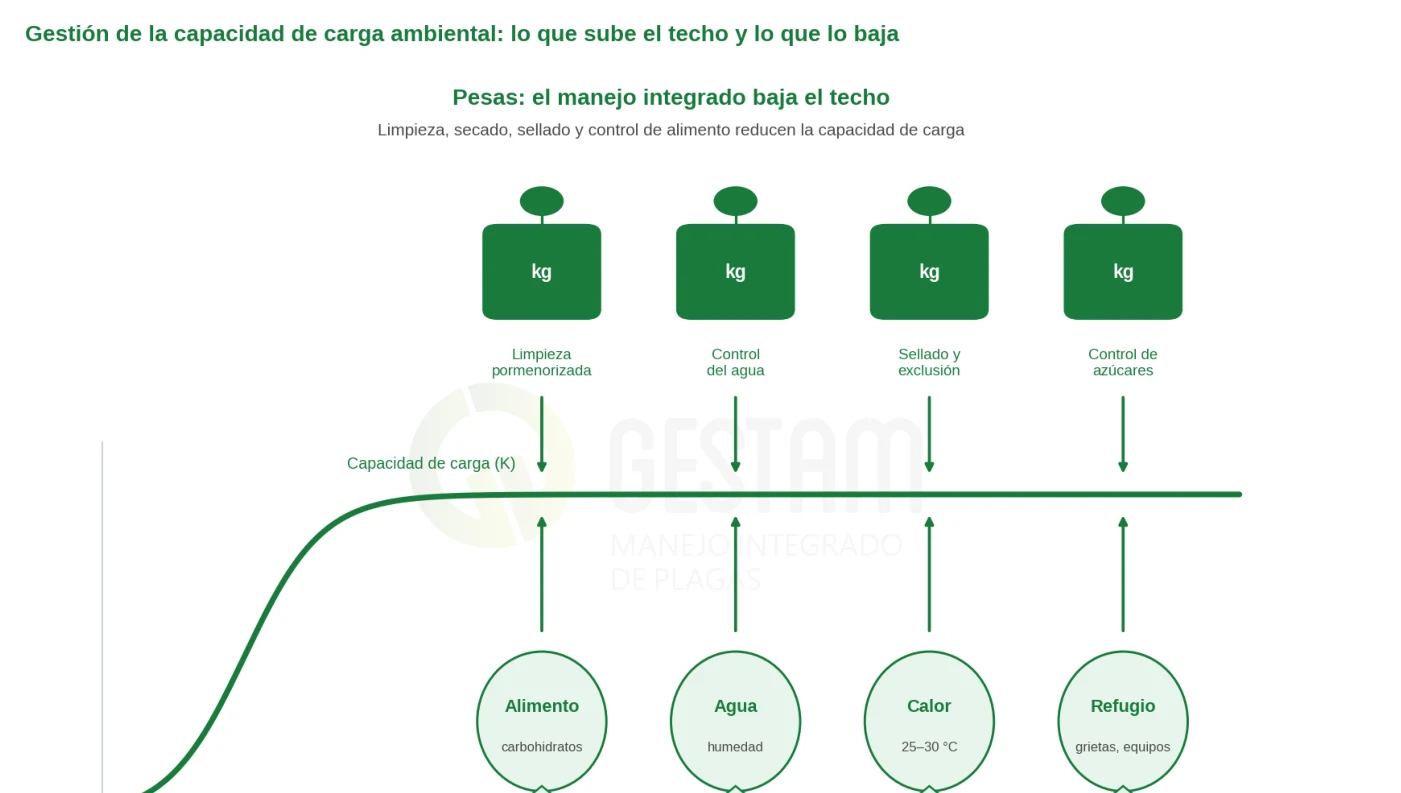
If the real-world curve stops climbing and levels off, it is because the environment has placed a ceiling on it. We call that ceiling environmental carrying capacity, and it is best understood not as a fixed number but as a supply: the sum of food, water, harborage, and temperature that a facility inadvertently makes available to the pest. We cannot modify the cockroach’s biotic potential—that is biology, and as we saw, it is non-negotiable—but we can lower the ceiling, and lowering it is the exact job of integrated management before the first insecticide ever appears. None of the measures that follow directly “kill” cockroaches; instead, they strip away the environment that sustains them, which in the long run is the only form of control that endures over time.
The table is set: the food that sustains the pest
The German cockroach is omnivorous, yet not indiscriminate: it is governed by carbohydrates, to the point that when given a choice, it selects a diet with a ratio close to one part protein to three parts carbohydrate. This tells us where to look inside a food plant. Farinaceous residues—flour, starch, grain dust—are its fuel par excellence, and there is a detail that compounds their value: the more finely divided the food, the more bioavailable it becomes, so much so that nymphs reared on ground diets develop faster than on the exact same whole food because milling removes a mechanical barrier. Put another way, fine dust accumulated inside a seam does not merely feed the insect: it speeds up the clock we described earlier.
The case of potatoes deserves a paragraph of its own because it illustrates how counterintuitive this can be. One tends to think of potato peelings as poor waste, yet the tuber’s readily available nutrients—starch, dry matter, and reducing sugars—are concentrated not in the center but in the cortex, the tissue immediately beneath the skin that peeling strips away. Added to this, cold-stored potatoes accumulate free sugars through cold-induced sweetening, meaning that a pile of refrigerated potato peels is a sugar- and starch-dense banquet served right on the surface. And rapidly soluble sugars are not neutral: glucose intake accelerates nymphal development and brings forward the first oviposition. Therefore, in management terms, removing food residues is not a matter of tidiness: it is population control by starvation, because every available carbohydrate source eliminated lowers the ceiling and slows the speed at which that ceiling is reached.
Detailed deep cleaning
Here we must be precise with a term that is often used loosely: the cleaning that reduces carrying capacity is not the cleaning that meets the eye. The food that sustains an infestation is rarely lying in plain sight on the floor—that gets swept every day—but rather where routine cleaning never reaches and where, not by coincidence, the cockroach chooses to live: motor housings, folds and seams of processing equipment, electrical panels with compromised seals, false bottoms, hollow legs, rails, and structural crevices. Those spots serve simultaneously as pantry, harborage, and heat source—an ideal combination for the species. Detailed—or specialized—cleaning is precisely the kind that goes after that hidden food:
it entails disassembling, accessing, and intervening inside the harborage rather than merely wiping the surface. It is the difference between a plant that “looks clean” and a plant that actually is clean, explaining why a facility can pass a visual inspection while harboring a substantial population inches from the auditor’s hands. And there is a nuance that only years in the field provide: a plant can look spotless and still give itself away by smell. German cockroach activity leaves a characteristic odor—oily, musky, with a sweetish undertone—that is not a subjective impression but the product of volatile compounds, largely carboxylic acids generated by the insect’s gut bacteria and excreted in its feces (which also function as an aggregation pheromone), combined with cuticular hydrocarbons that impregnate the harborage. That odor concentrates precisely inside the enclosed spaces where the pest shelters and often precedes the first visual sighting, so a trained nose reads conducive conditions—and often established activity—before seeing a single insect.
Water, heat, and harborage: the rest of the supply
Food is only one part. Water is often the most decisive factor, because cockroaches tolerate water deprivation far worse than food deprivation; permanent condensation, a leak, a puddle beneath equipment, or a damp harborage weighs more heavily on the population ceiling than a handful of crumbs. Hence a distinction worth making explicit: a hot, wet production process—involving cooking, washing, or steam—is not the same as a dry, cold process. Within the same building, the former offers a vastly higher carrying capacity than the latter simply because it brings the environment closer to that biological optimum of twenty-five to thirty degrees Celsius with available moisture. And then there is harborage: the cockroach is thigmotactic—it requires simultaneous contact with multiple surfaces and lives wedged inside cracks and crevices. That is why sealing—cracks, expansion joints, wall penetrations, electrical panel openings—is not cosmetic work but a direct subtraction of harborage: every crevice sealed removes square meters of habitat from the population and pushes the insects out into the open, where monitoring devices and other control measures can finally reach them.
Chemical treatment: cure, chronic treatment, or palliative?
Only now, after lowering the ceiling by every possible means, does it make sense to talk about insecticides. And it should be said plainly: chemical treatment is the management option with the narrowest margin of maneuver of all. It sits at the tip of the familiar IPM pyramid, depends the most on decisions that are NOT chemical, and most frequently leads to false expectations through the illusion that “more or better product” equals “more control.” The truth is that expecting an application—however well executed, and even using the market’s premium product—to achieve effective control on its own and serve as the “cure” is a grave mistake, even in incipient infestations. Nor can a cockroach-ridden facility be “cured” through chronic treatment, which is what happens all too often—“spraying everything possible every 15 days, cutting cleaning short and applying whatever fits into the remaining window because action must be taken”—since the carrying-capacity ceiling collides with the “floor” of the decisions that sustain the business: “Production.” While far from ideal, this approach keeps pest numbers as low as possible in the short term, yet over time makes control increasingly difficult. Eventually, routine chemical treatments become merely palliative. Therefore, we must NOT rely on a static IPM program. A program that leans on chemicals as its primary response is not controlling the pest: it is managing its own failure. Properly used, an insecticide complements everything described above; misused, it is merely an expense that accelerates resistance and guarantees a chronic problem.
Where the pest is located decides almost everything
The first caveat concerns scale and location. A treatment works only if it reaches where the cockroach actually lives—and as we have seen, it is not out in the open, but wedged inside its harborage, moving only the bare minimum needed to avoid exposure. Consequently, the two flashiest application methods—surface spraying or “fogging” the air of a room—are also the least effective, because they deposit the pesticide’s active ingredient where the pest does not live and, worse still, where it will not feed and may never even walk. The application that makes sense in a food plant is targeted: gel baits and localized crack-and-crevice treatments reaching the exact harborage and adjacent travel routes, not the floor that gets washed every day. The scale of the infestation dictates how much and where: an incipient focus is resolved with surgical precision, whereas an established structural infestation first requires regaining physical access to the harborage—which brings us back, time and again, to detailed deep cleaning and sealing. (Large-scale facilities may also require systemic approaches that we will address in future articles.)
Knockdown and residuality: product characteristics
Here lies a distinction that clients purchasing IPM services rarely know, and that explains many failures when the IPM technical director’s objective is not clearly communicated. Let me clarify: the knockdown effect is the rapid, visible death (or incapacitation) produced, for example, by certain pyrethroid formulations: within minutes, cockroaches are lying on their backs, an image that is tremendously reassuring to the client. Yet in reality, knockdown is often superficial and frequently counterproductive: it kills the most exposed individuals—a small, susceptible fraction of the total population—while dispersing much of the surviving population toward new harborages, fragmenting the focus rather than eliminating it. You may ask: what are they good for, then? In heavy infestations where cockroaches are visible on walls or floors even in broad daylight, population numbers must be knocked down as quickly as possible due to clear overpopulation; moreover, such applications often exert a flushing effect that reveals previously hidden foci and oothecae on the floor. Even so, knockdown and flushing are not the final word—critical field follow-up actions by technicians immediately after application carry enormous weight, as we will explore in future articles.
Residuality, by contrast, is a product’s capacity to remain active over time once applied: residual insecticides (typically water-based formulations or suspension concentrates) leave microscopic crystals of active ingredient on treated surfaces, which adhere to the insects’ legs as they walk across them and are subsequently ingested during grooming when they draw their legs and antennae through their mouthparts. Baits go a step further: they do not depend on spraying the insect, but on the insect coming to feed and carrying the active ingredient back to the harborage, where the species’ own biology—contact, coprophagy, intraspecific necrophagy, and so forth—produces secondary mortality reaching individuals that never touched the bait. However, gel baits have a limited service life and depend on being placed right at the aggregation site, away from excessive heat or free water that would rapidly degrade the matrix. Therefore, a chemical control program based on a single application modality, regardless of the insecticide brands used, cannot resolve a critical infestation; professional judgment—both from the applicator and from technical supervision and management—is indispensable.
The mirage of “smoke”: resistance
As if the above were not enough to illustrate the complexity of chemical control of Blattella germanica, there is a central issue: resistance. It is also what renders the solution clients most often request—a highly visible, odorous fumigation that reaches everywhere, such as thermal fogging, the famous “smoke”—the least effective option. True, it is dramatic and almost promotional, even if practically ineffective. What it is effective at, however, is accelerating insecticide resistance. Resistance to pyrethroids in the German cockroach, for instance, is documented worldwide and combines two mechanisms: metabolic detoxification, whereby the insect degrades the toxin using its own enzymes, and target-site insensitivity via kdr mutations, which is akin to changing the lock that the poison—the key—was designed to turn. That is why smoke generators, domestic or professional aerosols, and thermal fogs, which rely almost exclusively on pyrethroids, systematically fail against this species, whereas integrated treatments with broad rotation of methods, active ingredients, and formulations tend to succeed. Physiological resistance to certain gel bait actives has also been documented, alongside a remarkable behavioral resistance—glucose aversion—in which affected populations perceive glucose (used as a feeding stimulant in many baits) as bitter and reject it, leaving the bait untouched. Because resistance evolves rapidly—consolidating within months under selection pressure from a single active ingredient—the management conclusion is inescapable: there is no miracle product; modes of action must be rotated, active ingredients must be chosen according to the specific population, and no program may ever rest on a single chemistry. Insisting on “more of the same” is not perseverance: it is selecting, generation after generation, the individuals that survive. That is how a problem escalates.
Service frequency: biology does not wait for the contract
All of the above leads to an uncomfortable question that should be posed candidly to any IPM provider, and that clients should ask themselves: is the contracted service frequency what the problem requires, or merely what fit the budget? Because the biology we have described—cycles closing in weeks, overlapping generations, baits being consumed or contaminated, resistance demanding rotation and monitoring—imposes its own calendar, and that calendar cannot be negotiated with the purchasing department. A monthly visit may be more than enough for surveillance of a site under control, yet completely inadequate to reverse an active infestation, where the interval between interventions must be measured against the population growth curve rather than a cost spreadsheet or a brief window squeezed into an overnight maintenance shutdown. When contracted frequency lags behind the frequency imposed by the pest, the program is born losing, and no chemistry, however good, can bridge that gap.
The quality–production battle: when the decision belongs to management
It is worth remembering what is truly at stake, because it defines the urgency of everything else. An active German cockroach infestation in a food plant is not an aesthetic blemish or a minor nuisance: it is a food safety hazard in the most literal sense. The species is a vector—mechanical and, according to recent evidence, also biological—of enteric pathogens such as Salmonella and Escherichia coli, which it acquires by feeding on contaminated matter and disseminates through contact and feces; those same feces, along with its secretions and cast skins (exuviae), are a recognized source of allergens. Layered onto this sanitary dimension are regulatory and reputational risks: a single finding jeopardizes certification, contamination can trigger a product recall, and as noted at the outset, one insect in the wrong place can cost a brand. The cost of failing to resolve the problem is not hypothetical; it is simply harder to see upfront.
And yet—here lies the crux of this entire article—the bottleneck to solving it is almost never technical. Everything we have seen that genuinely works—detailed deep cleaning, structural sealing, regaining access to harborages, biologically driven service frequency, and the downtime required to treat properly—demands the one thing production resists surrendering: access, line downtime, deep sanitation, structural intervention, and working windows. And the decision to grant them is not made by the IPM technician or, in many cases, even by the quality manager: it is made by upper management, and almost always in financial terms.
Here an asymmetry operates that deserves to be named plainly. The cost of stopping a line, deep cleaning, and sealing is visible, immediate, and charged to a specific cost center; the cost of not doing so—a recall, a non-conformance, losing a customer, brand damage, a contaminated product reaching a consumer—is far greater, yet deferred and probabilistic, and therefore systematically underestimated. Biology, by contrast, knows nothing of fiscal years or quarterly closings: it keeps running at the speed we saw earlier, indifferent to spreadsheets. Decision-makers operate under that tension, and they decide better the more clearly they understand what truly weighs on each side of the scale.
That is why the entire scientific foundation we have reviewed—biotic potential, carrying capacity, the limits of chemical control—is neither an academic luxury nor a personal indulgence in a topic I am passionate about, but a management tool: free information that takes up no space and simply needs to be taken into account. Ultimately, it serves a single purpose: enabling decision-makers to act on solid information, on time, and with operational rigor. The role of the IPM lead is not to “quietly fix the problem” in the spare minutes left at midnight, but to translate biology into a defensible, risk-based—and whenever possible, quantified—recommendation that makes the true cost of waiting visible. Because deciding well means deciding on time—before the curve runs away—and with rigor—the right window, the right measures, properly documented—respecting a causal order that must never be inverted: first protect food safety, through it protect the brand, and through the brand, ultimately protect the business.
And this leads to a conclusion that, far from being a slogan, represents a concrete alignment of interests where I want to close this article: the client’s best business with its IPM service provider and the IPM company’s best business are, when viewed honestly, the exact same thing.
The best business is a pest-free client
I want to finish where the logic of everything above leads us, with an idea often repeated out of politeness but here meant literally: for any serious pest management company, the best business is a pest-free client.
And I say “management” (manejo) deliberately, because that word deserves to be defended against a trend that, I confess, irritates me. In recent years, largely as a marketing device in Spanish, the acronym GIP (Gestión Integral de Plagas) has been promoted as a superior evolution of the “old” MIP (Manejo Integrado de Plagas). With all due respect to those who use it, it is the same smoke-selling I have been pointing out, merely shifted from the product to the name: an apparent modernization that adds nothing and, upon closer inspection, actually subtracts.
Because the supposed superiority of “gestión” over “manejo” is, first and foremost, a mirage of translation. The Spanish acronym MIP translates the English Integrated Pest Management, and it is worth pausing on the final word: management. In English, management is broader than its most obvious Spanish translation, “manejo”: its root combines the Italian maneggiare—to handle or train a horse, from manus, the hand—with the French ménager—to administer prudently, to govern a household—so that management encompasses handling, administering, managing, controlling, and directing all at once. Properly understood, the “manejo” in MIP already contained “gestión” within it; renaming it does not elevate it, it merely swaps the label for one that sounds newer. Put plainly: IPM already integrates management, not the other way around.
Nor is that breadth an arbitrary reading; it was the original intent. The concept was born in 1959, when Stern, Smith, van den Bosch, and Hagen formulated the “integrated control concept” in Hilgardia, which later evolved into pest management and Integrated Pest Management; even then, choosing the word management deliberately expressed a management logic grounded in monitoring and action thresholds. Built on more than sixty years of that foundation, rebranding MIP as GIP not only adds nothing: it steps backward. Replacing “integrated” with “integral” sounds like more but means less, because “integrated” is a precise technical term—the deliberate integration of multiple tactics guided by monitoring—whereas “integral” is a brochure adjective promising “all-inclusive” while committing to nothing specific. And along the way, it abandons the shared language of science, international standards, and audit schemes, which is and remains IPM (MIP).
That is why it irritates me, and why I bring it up here: jumping from MIP to GIP is, on the level of words, the exact same operation as thermal fogging on the level of products—flashy and modern on the outside, hollow on the inside. And if I dwell on this, it is not out of pedantry, but because from the right concept—practicing true IPM rather than selling smoke—follows directly what defines a good client: not one with recurring infestations that justify endless visits and chemical applications, but one whose facility is under control and where the work is distilled to what genuinely adds value:
strict surveillance. Because a facility under control does not need constant chemical treatments: it needs monitoring, trend analysis, anticipation, and the maintenance of conditions that keep carrying capacity low. That state—surveillance—is for both parties the least expensive, the most predictable, and the least risky. The client stops paying for emergencies, unscheduled shutdowns, and damage; the provider stops putting out fires and can devote time to what truly sustains the outcome. By contrast, the reactive model—chronic chemical treatment—is the worst of all worlds: it costs both sides more and, above all, protects neither well.
Seen this way, pest management ceases to be an expense line to minimize and becomes what it always should have been: risk management. When a site is under control, focus shifts to where it belongs—data, trends, conducive conditions, audit readiness—and the IPM provider stops being an emergency sprayer to become a true member of the food safety team. There, interests finally align: both parties want the exact same thing—for nothing to happen, and to be able to prove why nothing happened.
That is why I return to the opening question about the clock: how much of a head start did we give the pest? Because the answer does not depend on biology—we already know how biology behaves—but on us: on how quickly we decide, with what rigor, and with whom beside us. The German cockroach will keep executing its program with the same punctuality as always; the difference—the only part in our hands—is whether we confront it with a living, risk-based program shared between those who produce and those who protect, or whether we keep buying smoke and waiting until Monday. That decision, not the insect, defines the outcome.
Bonus track: the cockroach, coffee, and sugar (or why the coffee machine is the perfect trap)
Allow me to close with a curiosity that, upon closer inspection, synthesizes everything discussed above. A popular belief holds that cockroaches are attracted to coffee, seeking their caffeine fix just like the rest of us. That is false. Caffeine has no nutritional value for the insect, coffee is acidic, and ground coffee beans—due to their pungent aroma and texture—are not among its preferred foods. And yet coffee makers—especially commercial espresso machines—are among the most notorious and frequent harborages of Blattella germanica. The question, then, is why.
The answer is that a coffee machine brings together, inside a single appliance, all four factors we identified throughout this article as responsible for raising carrying capacity. It runs hot and retains that warmth; it holds water and residual moisture in the tank, drip tray, and steam circuit; its interior offers a labyrinth of dark, tight, undisturbed crevices that is paradise for a thigmotactic species; and food is readily available—because while coffee grounds are not its favorite meal and serve merely as opportunistic sustenance, the real banquet lies right around the machine in the sugar, milk, and cream spilled across the counter. Thus, the coffee machine does not attract the cockroach because of what it is, but because of what it concentrates: it is the third section of this article turned into an object, all four factors assembled within arm’s reach.
Nor is this a minor anecdote. Industry surveys—non-academic, yet consistent—estimate that a considerable share of commercial machines harbor cockroaches; in New Zealand, a repair service reported in 2009 that roughly a quarter of the commercial machines brought in for servicing were infested. Anyone who has looked inside a high-volume espresso machine, with its constant heat and crevices impossible to sanitize without disassembly, will not be surprised in the slightest.
Up to this point, nothing we did not already know. What changes—and why this merits a separate chapter—is the courtroom. In a food plant, a cockroach inside a piece of equipment is an audit finding: a non-conformance, an action plan, a deadline. There is a system, there are rules, and there is room to correct. In a café, there is no BRC auditor waiting at the door. The auditor is the customer sitting at the table with a phone in hand. And their report is not a restricted internal document: it is a video of a cockroach crawling out of the espresso group head, uploaded, shared, and multiplied in a single afternoon.
That is the difference worth understanding. A certification, if lost, can be regained; an action plan is completed and the system moves forward. A conviction on social media has no corrective action plan and no deadline: there is no appeal, no closure, and no expiration date. The biology is the exact same one we have been describing—the same four factors, the same punctual insect—; the only thing that changed is who sits in judgment, and that judge turns out to be far more unforgiving than any standard, because it grants no extensions. In manufacturing, the pest threatens food safety and certification; in hospitality and foodservice, it threatens the one thing an establishment cannot rebuild with a corrective action: its reputation.
Read this article in issue 20 of LATAMPLAGAS (PDF)
Article charts