
The ten commandments for using light traps effectively
Light traps are indispensable tools in Integrated Pest Management (IPM), especially in businesses that must meet high hygiene and food safety standards.
 Marcelo Pereira · Issue 19


Listen to this article with your device’s voice.
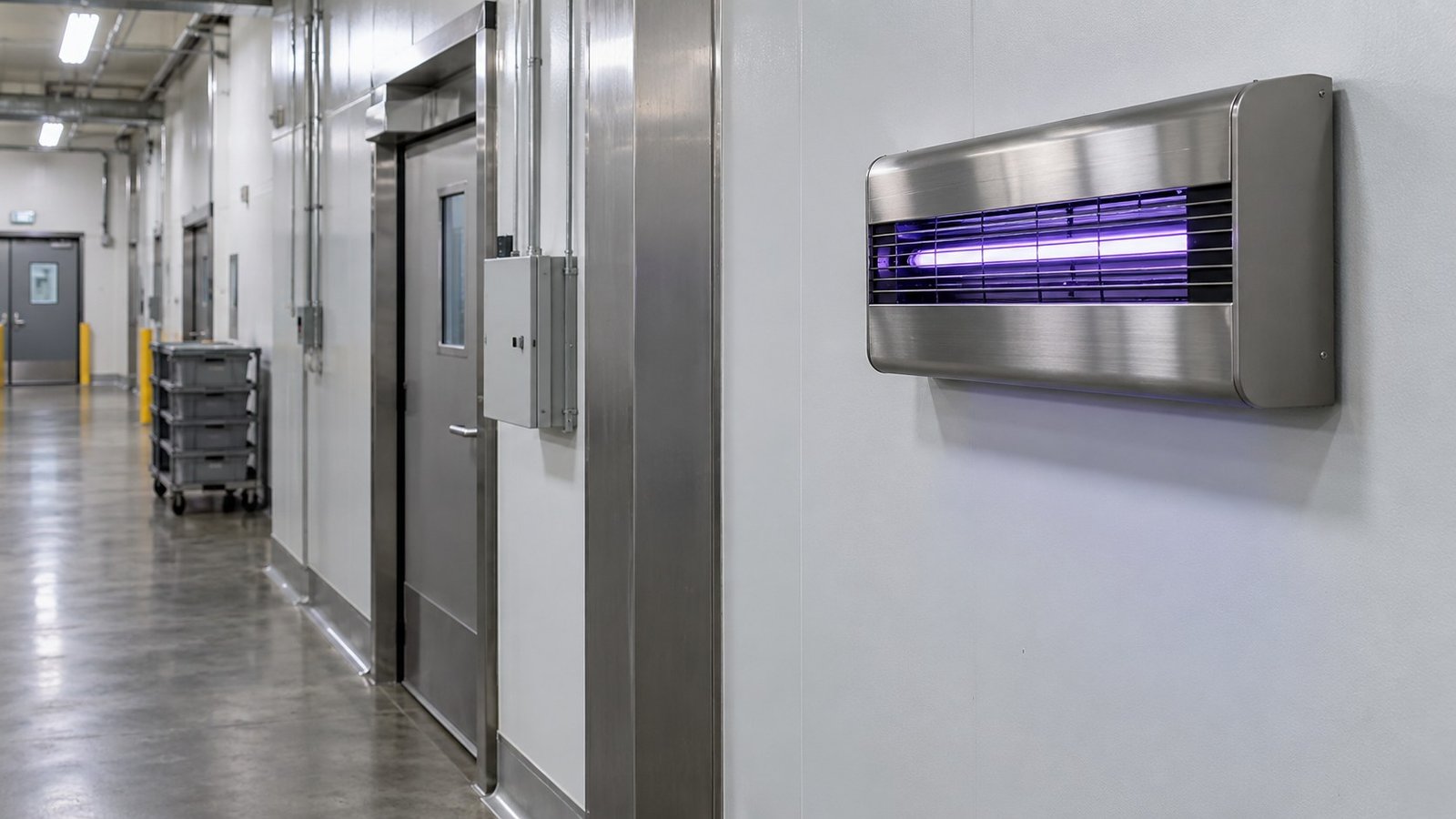
Light traps are indispensable tools in Integrated Pest Management (IPM), especially in businesses that must meet high hygiene and food safety standards — the food, beverage, pharmaceutical and packaging industries, among others. It is common, however, to see these devices used badly: installed in unsuitable places and left without maintenance. Using light traps incorrectly can have significant consequences: poor attraction, longer capture times, insects drawn towards critical areas and a risk of contamination, as well as non-conformities in audits. Ensuring light traps are used effectively is therefore not merely an operational matter but a technical necessity within the IPM programme. To help urban pest control service companies and to promote the safe, effective use of this equipment, this article sets out “The Ten Commandments for using light traps effectively”.
First commandment: do not install light traps facing doors or windows
Where the trap is installed is crucial. Do not install this kind of equipment facing doors or windows, since UV-A light can draw flying insects in from outside, increasing their presence in areas that ought to be protected. The trap's light should always be directed towards the interior of the space, so that it captures insects that have already entered rather than attracting them from outside. Otherwise the risk of contaminating food, packaging and equipment increases.
Second commandment: do not install light traps in walkways or forklift routes
Obvious though it may sound, this point is often ignored when light traps are installed. Do not install this equipment in circulation areas such as narrow corridors, lobbies or areas with forklift traffic. Doing so can cause accidents, bring the unit down and make maintenance tasks — replacing glue boards or tubes — more difficult.
Third commandment: do not install light traps near food
Do not place light traps near or above food, packaging machines, production equipment or conveyor belts, since this can draw insects towards critical areas and increase the risk of contamination. Keep a minimum distance of 3 metres between the trap and the areas to be protected, especially in sensitive zones.
Fourth commandment: do not install light traps facing air currents
Air currents, whether natural or from ventilation systems, can interfere with the insects' flight path, making capture harder and increasing the risk of contamination. Air flow can also blow insects onto food, equipment or sensitive surfaces. Install traps where air flow will not compromise their effectiveness.
Fifth commandment: do not install light traps near other light sources
Other light sources, such as the room's own lighting, can reduce a trap's effectiveness by splitting the insects' attraction. Keep a minimum distance of 3 metres between the trap and other light fittings to avoid interference. As a recommendation, replace conventional lamps with sodium vapour lamps (yellow in colour), which attract fewer insects. Where LED fittings are used, choose warm light to minimise competition with the trap.
Sixth commandment: do not install light traps outside the pest's flight range
Installing a light trap at an unsuitable height, or outside the target pest's usual flight range, can leave insects in the space for longer, increasing the risk of contamination and making capture harder. The recommended installation height is usually between 1.50 and 1.80 metres, as this corresponds to the most common flight range of flying insects. That range can vary, however, with the species and the conditions of the setting. It is therefore essential to assess factors such as the type of insect, the layout of the site and the intensity of the lighting before installation.
Seventh commandment: replace UV-A tubes within the manufacturer's recommended period
The UV-A tubes in light traps degrade with use and lose their effectiveness at attracting insects. They must therefore be replaced periodically, following the manufacturer's recommendations. Most fluorescent UV-A tubes have a service life of 8,000 hours and should be replaced roughly every 11 months. LED UV-A tubes have a longer life, close to 16,000 hours, and should be replaced every 22 months. Even if the tubes are still lit, by the end of their service life they can lose up to 40% of their attractive power. Periodic replacement is therefore indispensable if the equipment is to remain effective.
Eighth commandment: replace the PETG tube guard every 8,000 hours of use
To comply with health regulations and food safety requirements, light traps must have protection against glass tube shattering, either through a shatterproof coating or an external guard. In Brazil it is common to use rigid, transparent plastic guards known as PETG (polyethylene terephthalate glycol-modified), fitted over the UV-A tubes. Over time PETG degrades: it can become scratched, yellowed or lose its transparency, all of which reduce the trap's effectiveness. This deterioration can cut attractive power by up to 30%, so this maintenance must be carried out rigorously. The guard should be replaced every 8,000 hours of use — roughly 11 months — or sooner if it shows signs of deterioration.
Ninth commandment: replace glue boards before they reach 70% saturation
The absolute limit for replacing glue boards is when 70% of their surface is covered with insects. It is advisable, however, to change them before that point in order to maintain adhesion and capture. Replacement frequency should be set according to the conditions of the environment, the level of infestation and the season. In tropical countries, or where insect activity is high, replacement tends to be more frequent. Factors such as high humidity, dust and airborne particles can also compromise the adhesive, reducing the boards' effectiveness and service life. If replacement is not carried out at the right time, larger insects can escape, affecting monitoring and increasing the risk of contamination if they fall onto food or sensitive surfaces.
Tenth commandment: clean light traps regularly
Regular cleaning is essential to maintaining effectiveness and extending the life of the traps. The frequency should be set according to the conditions of the setting and the maintenance programme. Adhesive residues can accumulate dust, harbour micro-organisms and compromise the unit's performance. Cleaning should be done with a damp cloth and neutral detergent, or with products suitable for industrial kitchens, always diluted according to the manufacturer's instructions. Do not wash the trap directly under running water or use petroleum-derived products, as these can damage components. Favour plant-based products such as citrus-based cleaners, which are better suited to use in the food industry and particularly effective at removing residues and keeping the equipment in good condition.
CONCLUSION
Light traps are indispensable tools in Integrated Pest Management (IPM), but their effectiveness depends directly on correct installation, use and maintenance. This article has set out the Ten Commandments for using light traps effectively, bringing together the main practices that should be applied day to day. From suitable positioning, respect for the conditions of the setting and the behaviour of the pests, through to periodic maintenance of the components, each of these principles helps improve capture effectiveness and reduce contamination risks in sensitive areas. Applying these commandments consistently strengthens the control of flying insects, optimises equipment performance and ensures that quality and food safety requirements are met. A badly used light trap increases risk; used correctly, it becomes a strategic tool for analysis and decision-making.