
The future of mosquito-borne disease control in Europe
Mosquito-borne diseases have become one of the most significant health challenges facing Europe.
 Rubén Bueno-Mari · Issue 19


Listen to this article with your device’s voice.
Mosquito-borne diseases have become one of the most significant health challenges facing Europe. For decades, conditions such as dengue, chikungunya and West Nile virus were regarded as distant problems, associated mainly with tropical and subtropical regions. The present picture is very different. Climate change, globalisation, increased human mobility and international trade have all favoured the spread of invasive mosquitoes capable of transmitting diseases that previously had no presence on the European continent. Added to this is growing resistance to insecticides, a phenomenon that threatens the effectiveness of many of the tools currently used for vector control. Experts agree that Europe faces a new epidemiological reality in which prevention, surveillance and technological innovation will be essential if future health risks are to be reduced.
The mosquitoes that concern Europe
The mosquito species of greatest public health importance include both native and invasive species. Among the native species, Culex pipiens stands out as the main vector of West Nile virus, a disease that in recent years has caused thousands of human infections and hundreds of deaths in Europe. The greatest current concern, however, relates to invasive mosquitoes of the genus Aedes, in particular:
- Aedes aegypti, vector of dengue, Zika, yellow fever and chikungunya.
- Aedes albopictus, known as the Asian tiger mosquito.
- Aedes japonicus.
- Aedes koreicus.
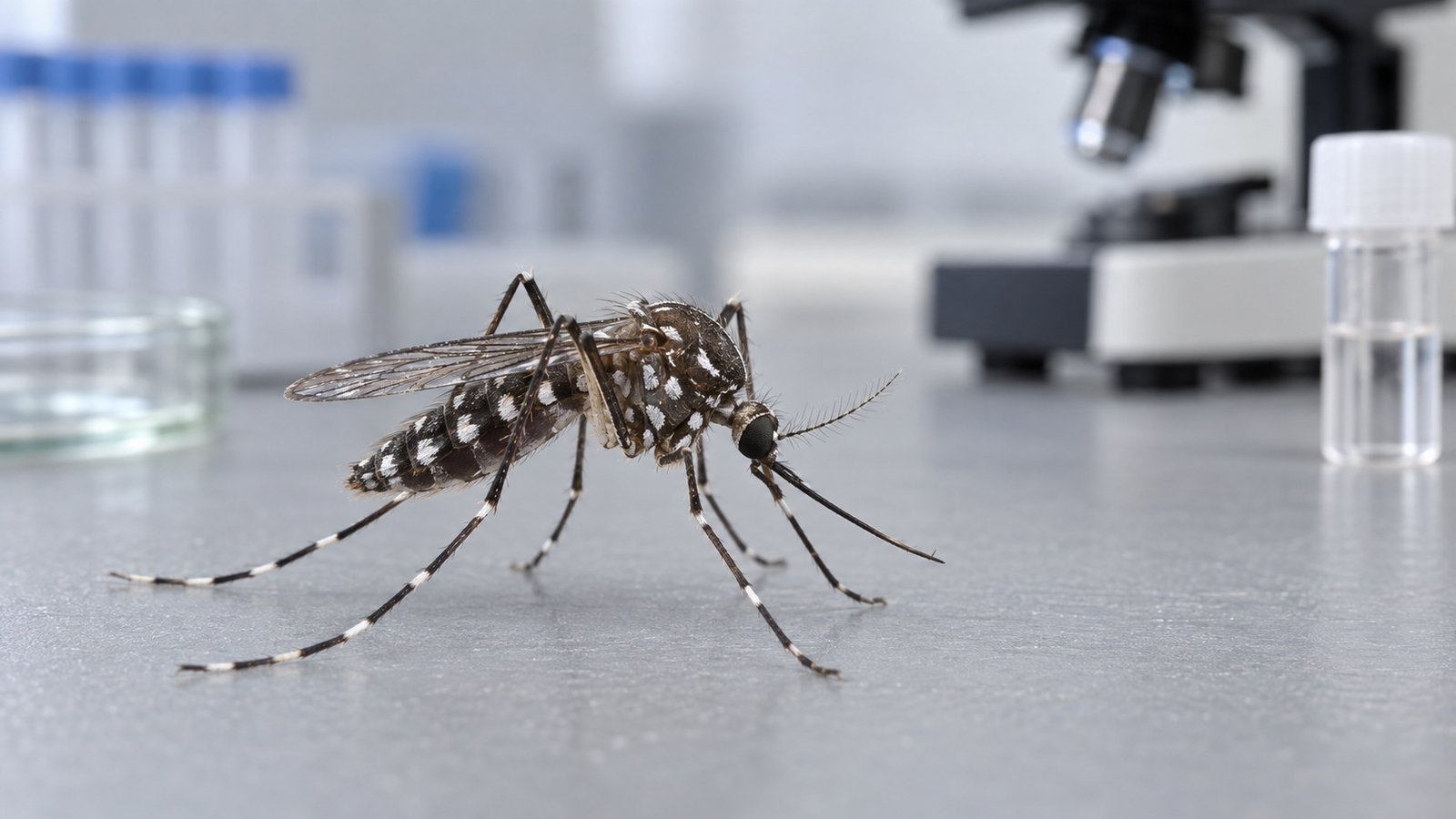
The Asian tiger mosquito deserves particular attention. Since its arrival in Europe in the 1990s it has established itself in numerous countries thanks to its great capacity to adapt to urban and peri-urban settings. Its presence has been directly linked to locally acquired outbreaks of dengue and chikungunya in various European countries, showing that local transmission of these diseases is no longer a hypothesis but a reality.
Dengue and chikungunya: increasingly frequent threats
Dengue is currently one of the fastest-growing viral diseases worldwide. Tens of millions of people are estimated to be infected each year, and roughly half the world's population lives in areas at risk. Europe is not endemic for dengue. International travel, however, continually brings in infected people from areas where the virus circulates actively. When those people are bitten by competent mosquitoes present on European soil, a chain of local transmission can begin. The first locally acquired outbreaks recorded in Europe demonstrated that the continent has environmental conditions suitable for the virus to circulate. Something similar applies to chikungunya, a disease characterised by high fever and severe joint pain that can persist for months. Significant outbreaks have occurred in France and Italy in recent years, driven by the spread of Aedes albopictus and favoured by increasingly high temperatures during the warm months. Specialists believe that growing international tourism and climate change will increase the frequency of such events in the coming decades.
West Nile virus: the main current threat
Although dengue tends to attract more media attention, West Nile virus is currently the deadliest mosquito-borne disease in Europe. The virus maintains a complex transmission cycle between wild birds and mosquitoes of the genus Culex. Humans and horses are considered accidental hosts. Most infections go unnoticed, but some patients develop severe neurological illness that can leave permanent damage or even prove fatal. Thousands of human cases have been recorded in Europe in recent years, especially in countries of the south and east of the continent. One of the factors that most concerns researchers is the virus's capacity to spread into new regions, driven by bird migration routes and by climatic conditions increasingly favourable to the vector mosquitoes.
Climate change: an ally for the vectors
Europe is one of the regions of the planet where temperatures are rising fastest. Changes in rainfall patterns, milder winters and extreme weather events are profoundly altering mosquito ecology. Higher temperatures speed up larval development, increase how often females feed and favour the replication of many viruses inside the mosquito. Less severe winters also allow some species to remain active for longer periods of the year. Flooding and heavy rain, meanwhile, create new breeding sites, while urbanisation produces countless artificial containers capable of holding water and serving as breeding places. The combination of these factors favours the geographical spread of the vectors and increases the opportunities for disease transmission.
Insecticide resistance: a growing challenge
One of the greatest problems for control programmes is the emergence of insecticide-resistant mosquito populations. For decades chemical treatments have been one of the main control tools. Repeated exposure to the same active ingredients, however, has favoured the selection of resistant individuals. Various populations of Aedes aegypti, Aedes albopictus and Culex pipiens now show resistance to widely used insecticides, particularly pyrethroids. This reduces the effectiveness of interventions and forces a rethink of traditional strategies. The situation is particularly worrying because the options available for chemical control are increasingly limited, owing to stricter environmental regulation and the progressive withdrawal of certain active ingredients.
Surveillance: the first line of defence
Against this background, entomological and epidemiological surveillance takes on fundamental importance. Entomological surveillance makes it possible to detect the presence of invasive mosquitoes, monitor their spread and assess population levels. Epidemiological surveillance, for its part, focuses on the early detection of disease and the identification of possible outbreaks. Various European countries have developed national programmes that bring together surveillance of mosquitoes, reservoir animals and human cases under the “One Health” approach, recognising the close relationship between human, animal and environmental health. Italy, Spain, France, Portugal, Greece, Serbia and Cyprus are among the countries that have implemented advanced surveillance systems capable of generating early warnings and enabling rapid responses when health risks appear.
New tools for mosquito control
Given the limitations of conventional strategies, research is turning increasingly towards innovative and sustainable methods. Among the most promising alternatives are:
Biological control
Using bacteria such as Bacillus thuringiensis israelensis (Bti) makes it possible to control mosquito larvae with reduced environmental impact. These products are highly selective and are among the most widely used tools in modern integrated management programmes.
Mass trapping
Strategically installing traps to capture adult mosquitoes can help reduce populations when combined with other control measures.
The Sterile Insect Technique
This consists of releasing sterilised males that mate with wild females without producing viable offspring. The progressive reduction of the population significantly lowers vector density.
Wolbachia
This naturally occurring bacterium can be introduced into mosquito populations to reduce their capacity to transmit viruses or to affect their reproduction. The results obtained in various countries have aroused growing international interest. Although regulatory and social challenges remain, these technologies could become complementary tools for controlling vector-borne diseases.
Community participation
No strategy will be entirely effective without the active participation of the public. Removing containers holding standing water, maintaining gardens and public spaces properly, using personal protection measures and cooperating with the health authorities all remain essential pillars of vector control. Experts stress that education and public awareness will be every bit as important as any technological innovation.
Towards an integrated strategy
Europe faces a complex and dynamic situation when it comes to mosquito-borne diseases. Climate change, the spread of invasive species and insecticide resistance will continue to pose challenges in the years ahead. Advances in surveillance, biotechnology and integrated management nevertheless offer new opportunities to reduce the risks. The future of vector control will depend on the ability to combine traditional strategies with innovative tools, supported by smart technologies and active community participation. Only through an integrated, sustainable and evidence-based approach will it be possible to confront successfully the emerging threats associated with mosquitoes and to protect public health in Europe and in other regions of the world.
Summary note on the paper “Present and Future of Mosquito-Borne Disease Control in Europe with a Specific Focus on the Mediterranean”, Insects 2026, 17(3), 254; https://doi.org/10.3390/insects17030254. All images accompanying this article were generated with artificial intelligence.