
From eradication to resistance: the evolution of chemical control of Aedes aegypti in Argentina
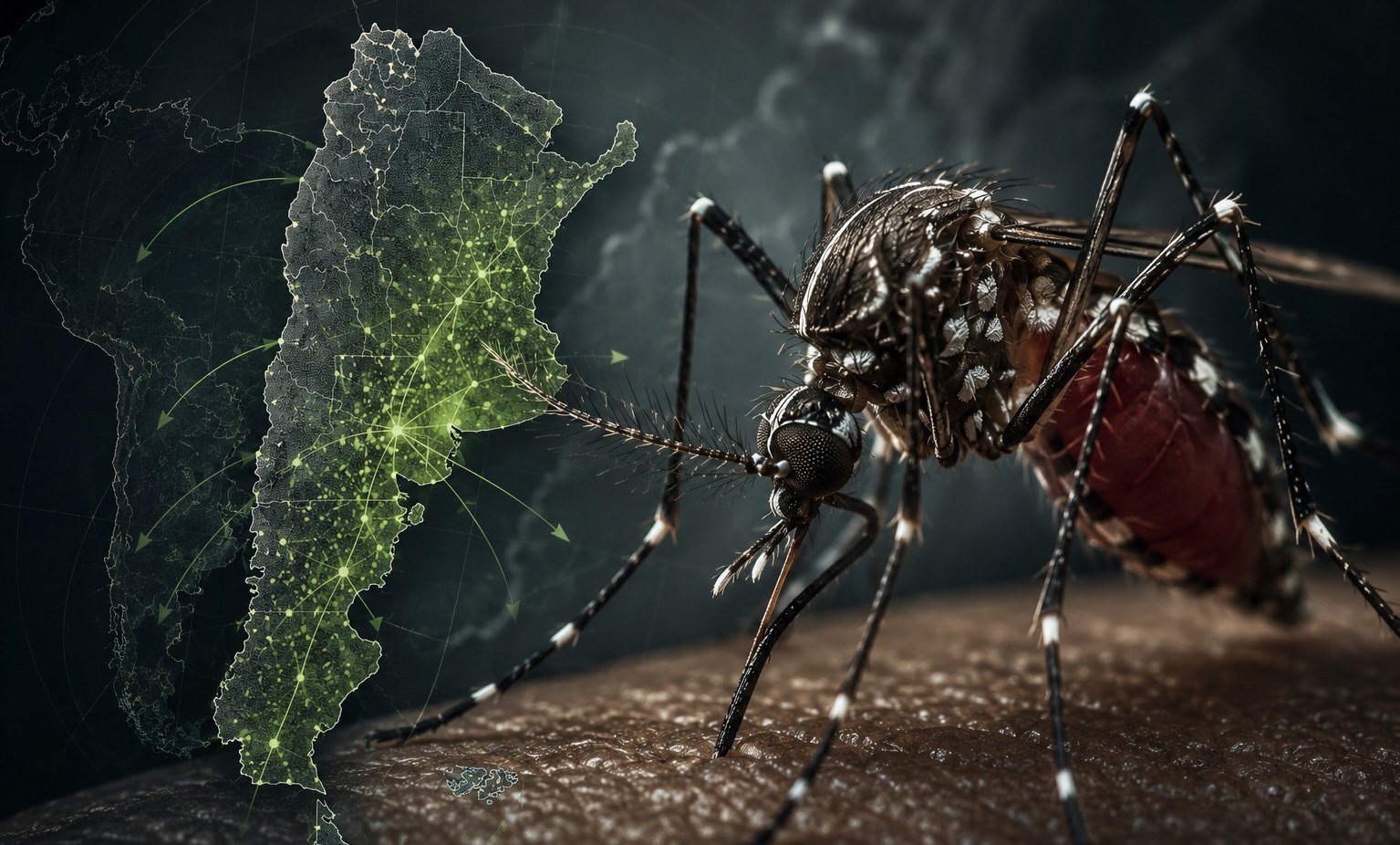
Aedes aegypti (L.) is the main mosquito responsible for transmitting dengue viruses in the Americas and plays a significant part in the spread of urban yellow fever.




Listen to this article with your device’s voice.
Introduction
Aedes aegypti (L.) is the main mosquito responsible for transmitting dengue viruses in the Americas and plays a significant part in the spread of urban yellow fever. It is found throughout the world, inhabiting regions that extend from the tropics and subtropics to certain temperate areas. In South America its history is marked by cycles of colonisation, eradication and re-establishment, driven by both human-mediated and environmental factors.
Historical expansion and genetic diversity of Aedes aegypti in Argentina
In Argentina, Ae. aegypti was present for centuries before a continental eradication campaign was launched in the middle of the twentieth century. Led by the Pan American Health Organization (PAHO), the programme ran from the late 1940s through the 1960s with the specific aim of eliminating the species from the Americas. The coordinated effort included intensive vector surveillance, reduction of breeding sites and chemical control. By 1963 the national Ministry of Public Health declared the species eradicated in the country, and in 1965 PAHO's Directing Council ratified that achievement. The eradication was regarded as a major public health success, interrupting transmission cycles of yellow fever and other arboviruses. It did not, however, prove permanent. Waning political will, weakened surveillance programmes and the re-establishment of populations in neighbouring countries all facilitated reinvasion. Following the reintroduction of Ae. aegypti into Brazil in 1975, the species spread throughout the Southern Cone. Reinfestation in Argentina was first detected in 1986 in the north-eastern (NE) provinces of Misiones (Posadas and Puerto Iguazú) and Formosa (Clorinda and Puerto Pilcomayo). This marked the first confirmed reappearance since eradication.
The expansion was rapid: by 1991 Ae. aegypti had reached the province of Buenos Aires, extending its range into the country's temperate region. By 1995 it had already been recorded in central provinces such as Córdoba. In recent decades Ae. aegypti has expanded its range beyond previously recognised climatic limits. While earlier models suggested the species could not survive the winter in areas with mean annual temperatures below 15 °C, its presence has been documented in colder cities such as Dolores and Villa Gesell, where mean annual temperatures are below that threshold. The detection of larvae in cemetery flower vases and discarded tyres in Dolores in 2012 suggests it can overwinter and that permanent populations may have become established, challenging earlier assumptions about climatic constraints.
In the early 2000s the southern limit of Ae. aegypti distribution in Argentina ran roughly from the north-west (NW) to the south-east, reaching latitudes close to 35° S. In the following decade the range advanced further, with isolated records near 37° S and exceptional detections at 38° S in two large urban centres: the city of Neuquén in the west and Bahía Blanca in the east. More recently, still more southerly occurrences have been reported, including San Antonio Oeste in the province of Río Negro (40°43′ S), currently the southernmost confirmed record of the species in South America, and Tandil in the province of Buenos Aires, notable as the coldest positive locality in the country. The re-establishment of Ae. aegypti has been accompanied by population genetics studies that shed light on its recolonisation routes. Analyses based on mitochondrial DNA markers (RFLP of the A+T-rich region) revealed a marked phylogeographical structure in Argentina. The results showed that passive migration from Brazil and Paraguay into Argentina would be strongly facilitated by human commercial traffic. Albreu and Gardenal examined the distribution of Ae. aegypti mitochondrial lineages in Argentina using the ND4 gene fragment. Populations from north-western Argentina and Bolivia share unique haplotypes absent from other regions, while north-eastern Argentine populations group with those from Paraguay. Three major haplogroups were identified (clades 2−1, 2–2 and 2–3), suggesting multiple colonisation events from neighbouring countries such as Bolivia, Paraguay and Brazil. The NWA–Bolivia clade (2−1) appears to have undergone an early expansion followed by fragmentation, possibly leaving relict populations that survived the eradication campaign in isolated pockets. The NEA–Paraguay clade (2–3) reflects a separate colonisation history, while clade 2–2, dominated by a single haplotype, characterises much of eastern Argentina and indicates a recent, rapid expansion from a genetically homogeneous source. This genetic evidence points to differing impacts of the mid-twentieth-century eradication programme between regions. In the east the campaign probably achieved a near-complete elimination of genetic variability, with recolonisation driven by a single genetic variant. The north-west and north-east, by contrast, retained or recovered high haplotype diversity, consistent with reinvasion from multiple external sources and possibly from persistent local populations. These contrasting genetic landscapes suggest diverse evolutionary histories and differing degrees of historical connectivity between regions. Today Ae. aegypti is established in almost every province of northern and central Argentina and continues to expand its range southwards and westwards. The persistence and adaptability of this vector, including its capacity to survive in colder climates than previously assumed, underlines the need for sustained surveillance, adaptive control strategies and further research into the ecological and genetic mechanisms that facilitate its spread.
The history of the species in Argentina — eradicated through coordinated regional action and later reintroduced by multiple routes — serves as a cautionary example of how fragile achievements in vector control are when political, logistical and environmental pressures align in favour of reinfestation.
History and current landscape of chemical control of Aedes aegypti in Argentina
Since the reinfestation of Argentina by Ae. aegypti during the 1980s, vector control strategies have evolved in response to changing epidemiological, social and operational contexts. The decentralisation of health services transferred responsibility for mosquito surveillance and control to local municipalities, which created challenges around resources, staff training and the coordination of methods and procurement. From 1998, emergency control campaigns focused mainly on chemical interventions, including ultra-low-volume (ULV) thermal fogging, portable misting equipment and focal house-to-house treatments. Larvicides were applied, including temephos granules and later Bacillus thuringiensis israelensis (Bti), in water-holding containers; while adulticides such as the organophosphate fenitrothion (Sumithion®) and pyrethroids such as deltamethrin and cis-permethrin were used in oil-based space applications with diesel as the solvent. These methods were clearly suboptimal for use in urban settings, where residents are highly exposed to the insecticides applied. Such insecticides were intended to suppress mosquito populations during outbreaks, not to be used routinely for prevention. Although chemical control achieved short-term reductions in mosquito densities and helped manage certain outbreaks in northern Argentina, several limitations became evident. Extrapolating strategies from other countries without adapting them to local socio-economic conditions reduced their effectiveness. Social programmes that supported vector control by mobilising unemployed workers during the 2001 recession ceased once the economy recovered, creating gaps in implementation. Safety risks, resistance from residents and locked houses also made access for treatment difficult, highlighting the need for alternative approaches.
The Centre for Research on Pests and Insecticides (CIPEIN) in Buenos Aires, a WHO Collaborating Centre, has helped optimise control methods through research into new insecticides and formulations, including permethrin isomers, insect growth regulators (IGRs) such as pyriproxyfen and triflumuron, and new application mechanisms such as insecticidal fumigant tablets for indoor use. Field studies combining adulticides and larvicides demonstrated greater control efficacy and more prolonged suppression of mosquito populations than individual treatments [26–28]. Other groups in Argentina subsequently repeated similar trials using combined ULV formulations. Integrated approaches that combine chemical control with community participation and environmental management have been recognised as essential to sustainable vector control.
Comprehensive community-based programmes nevertheless remain underdeveloped in Argentina. Periodic interventions using IGRs such as triflumuron, combined with the routine emptying of containers, have shown promising results in keeping infestation levels low during the mosquito's breeding seasons, although emptying alone is insufficient.
Insecticide resistance
Insecticide resistance has become a major obstacle to controlling this mosquito, both worldwide and in Argentina. CIPEIN reported the first detection of pyrethroid resistance in adult Ae. aegypti from the province of Salta, associated with control failures. Resistance levels to cis-permethrin were classified as high, with cross-resistance to deltamethrin, while susceptibility to the organophosphate malathion was retained. The kdr mutations V1016L and F1534C have recently been detected. More importantly, CIPEIN was the first to identify the V410L mutation in multiple regions of Argentina and to correlate it with toxicological evidence of insecticide resistance [34]. Another study subsequently reported the presence of this mutation at local scale in the province of Buenos Aires, but without establishing an association with resistance.
When pyrethroid resistance emerges in Ae. aegypti populations, it is considered good practice to implement insecticide resistance management (IRM) by rotating to alternative classes. In Tapachula, Mexico, discontinuing pyrethroids (1999–2013) in favour of organophosphates during 2013–2019 led to a significant reversal of resistance after six years. Similarly, in Brazil, laboratory selection with malathion in populations originally resistant to deltamethrin resulted in the restoration of susceptibility to pyrethroids and temephos. These IRM principles are widely recommended by the WHO.
In Singapore, where Ae. aegypti shows high levels of pyrethroid resistance, susceptibility to organophosphates such as pirimiphos-methyl has been maintained. In this context, our laboratory detected widespread resistance to permethrin but found that all populations tested remained susceptible to pirimiphos-methyl.
Permethrin and pirimiphos-methyl are two widely used classes, but they differ in efficacy and toxicity. Permethrin acts on neuronal sodium channels, producing rapid knockdown and high mortality, but its efficacy has been compromised by resistance. Pirimiphos-methyl, an acetylcholinesterase inhibitor, has shown sustained efficacy, especially in microencapsulated formulations such as Actellic® 300CS. Both present risks to non-target organisms, though to differing degrees. Permethrin is highly toxic to aquatic insects and pollinators, while pirimiphos-methyl can also affect them, but to a lesser extent. Both are classified by the WHO as Class II — moderately hazardous.
Challenges and prospects
The economic crisis in Argentina has significantly reduced vector control activities. Current programmes are limited and depend heavily on scarce resources at local level. Although the dengue vaccine represents an important advance, it has generated an overestimation of its capacity to replace vector control. As a result, the current strategy fails to respond adequately to epidemics. According to the WHO (2017–2030), Argentina needs:
1. Innovation in Aedes aegypti control tools
- Advance behavioural research to identify new targets.
- Broaden repellent options beyond DEET. Develop attractants to improve the efficacy of adulticides and larvicides.
- Introduce non-pyrethroid active ingredients for space control. Monitor and manage insecticide resistance.
- Maintain the effective use of larvicides with proven formulations.
2. Community participation and adoption of preventive measures
- Strengthen education and awareness about vector biology and risk.
- Use social media and local channels for prevention messages.
- Eliminate domestic breeding sites, especially water-holding containers.
- Provide safe, accessible tools (ovitraps, impregnated tablets or papers, for example).
- Ensure community tools meet safety standards.
3. Intersectoral coordination for integrated management
- Strengthen collaboration between the Ministry of Health and research institutions.
- Apply academic findings to operational practice through co-designed studies.
- Promote applied research on priorities in mosquito management.
- Establish regular platforms for exchange between health officials, scientists and implementation actors.
Conclusions
Overall, although chemical methods remain central to the outbreak response, challenges such as insecticide resistance, logistical limitations and social factors highlight the need to implement multifaceted, locally adapted vector control strategies in order to manage Ae. aegypti populations effectively and reduce the risk of dengue transmission in Argentina.
Summary note on the paper “From Eradication to Resistance: The Evolution of Chemical Control of Aedes aegypti in Argentina”, Current Tropical Medicine Reports (2025), 12:24. https://doi.org/10.1007/s40475-025-00357-z All images accompanying this article were generated with artificial intelligence.